*College Football Betting | Week 8 Power Ratings Analysis*
College Football Betting Power Ratings for Week 8
October 21, 2026 · By Marcus Cole
Table of Contents
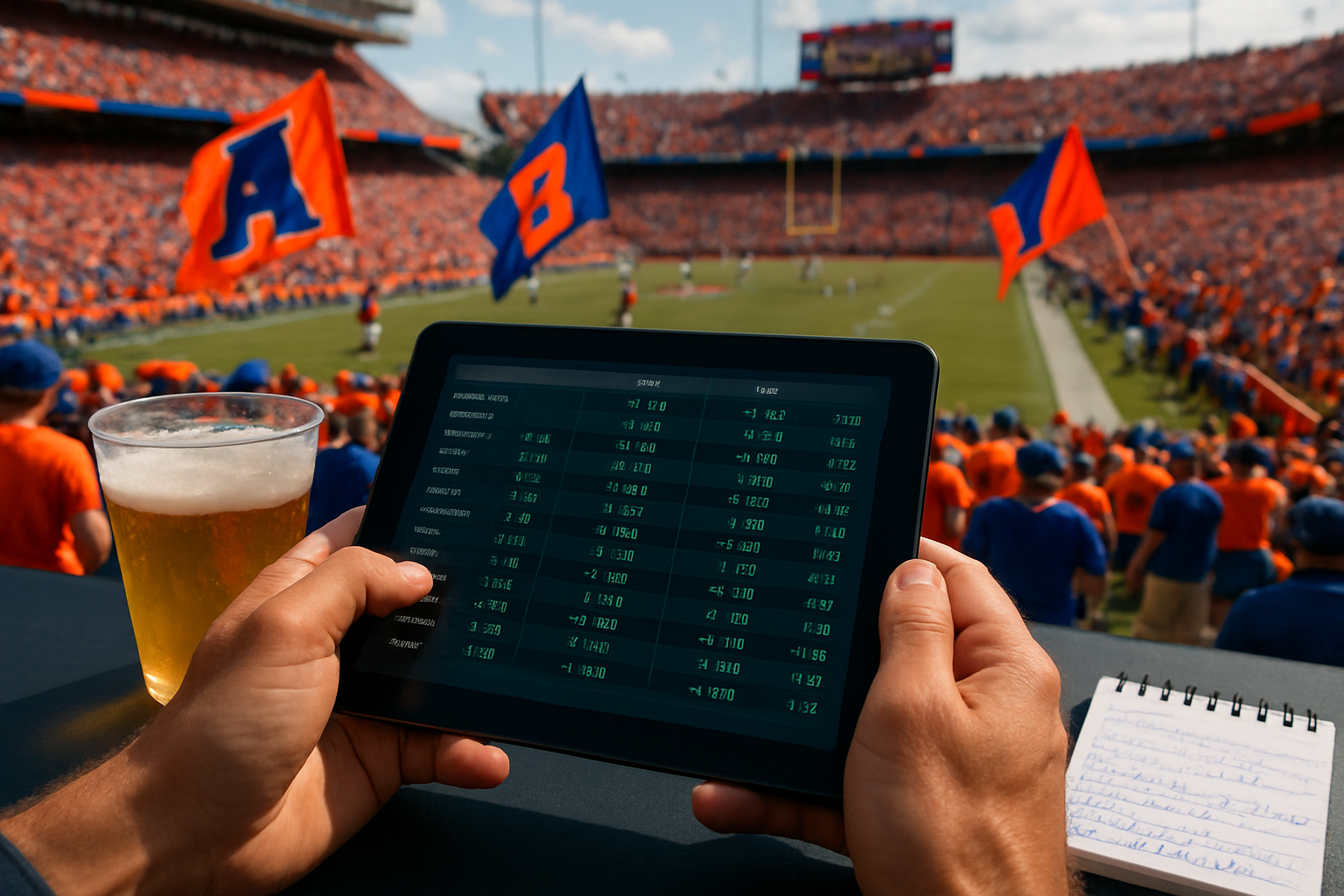
What Are Betting Power Ratings and Why Do They Matter in Week 8?
Power ratings (also called power rankings or efficiency ratings) are point-value assessments that bettors and oddsmakers assign to each team based on adjusted performance metrics — think offensive and defensive efficiency per play, adjusted for strength of schedule, margin of victory, and venue. The core idea: if Team A has a power rating of 30 and Team B is rated at 24, the expected spread in a neutral-site game would be 6 points, with the home-field adjustment (typically 2.5 to 3 points in college football) applied on top.
Why Week 8 specifically? This is the golden window for power-rating bettors. By this point in the season, early-schedule noise (non-conference cupcakes, first-game rust, coaching adjustments) has been filtered out. Seven full games of data give us a meaningful sample. The books are still anchored to public perception in some spots — and that's where CLV (closing line value) — the benefit of getting a better number than where a line closes — becomes attainable.
Bettors who want to dig deeper into line movement concepts should check out our guide on how to read line movement. If you're newer to this framework, our Betting 101 beginner's guide lays the groundwork.
Week 8 Power Rating Tiers: Where the Value Lives
Based on our analysis of efficiency data, schedule-adjusted margins, and early Week 8 line movement, here's how we're tiering the college football landscape heading into the weekend of October 24-25, 2026.
Tier 1: Elite (Power Rating 35+)
These programs have demonstrated dominance in both phases of the game. Their spreads are often priced efficiently — the books know them well — but steam moves (sudden, sharp-money-driven line shifts) on opponents of these teams deserve attention when they occur.
Oregon continues to operate as one of the nation's most complete teams, with an offensive efficiency ranking near the top of the FBS. Their power rating currently sits near the top of our model. When Oregon opened as large favorites this week, the line has held, suggesting the market agrees with the assessment. There's limited spread value betting with elite programs in week 8 — you're paying maximum juice — but their totals have been worth monitoring. Oregon's games have trended over at a historically high clip this season.
Ohio State remains a Tier 1 program despite a schedule that has produced some closer-than-expected results. The Buckeyes' defensive efficiency numbers are elite, but our model flags a small gap on the offensive line metrics — something to watch when evaluating spread value against top-25 defenses.
Georgia rounds out the top tier. The Bulldogs have covered at a strong rate as favorites, and their power rating reflects arguably the deepest defensive front in the SEC. They're among the pricier moneylines on the board, typically ranging from -350 to -450 against mid-tier opponents.
Tier 2: Legitimate Contenders (Power Ratings 26–34)
This is the most actionable tier for Week 8. Teams here are good enough to compete against anyone, but their ratings don't always match the public's perception — creating spread value in both directions.
Penn State has climbed our ratings following a run of dominant performances. Our model has them as a legitimate 27–29 range program, but the market periodically undervalues them, especially in road scenarios where casual bettors underweight Big Ten home-field advantages. Watch for steam if Penn State is getting 2.5 points or fewer against a team rated below 22.
Texas is interesting right now. The Longhorns are positioned as a Tier 2 program in our model but carry a Tier 1 price tag in certain matchups because of brand recognition and handle volume — handle being the total dollar amount wagered on a game. Large handle generates inflated lines favoring name programs. Texas games attract enormous public money, which can create value on their opponents in the right spot.
Ole Miss has quietly outperformed our preseason projections. The Rebels' offensive efficiency in SEC play is legitimately elite, and their power rating has climbed four points since Week 1. If the books haven't caught up entirely to this trajectory — and in some spots, our analysis suggests they haven't — there's potential CLV to be found on Ole Miss spreads before they close.
Miami (FL) has been a model of consistency on both sides of the ball. Their power rating currently sits around 28 in our model, which makes them live dogs in matchups where they're being asked to cover more than 7 points.
Tier 3: Volatile (Power Ratings 18–25)
This tier generates the most betting interest because the lines are more negotiable. Teams here win enough to generate public support but have enough variance in their performances that bookmakers are pricing uncertainty into their lines.
Kansas State fits the profile of a team the public consistently overvalues. Big 12 brand recognition inflates their lines, but underlying efficiency metrics point to vulnerabilities in pass defense that haven't been tested at the highest level yet.
Missouri is on the opposite end — potentially undervalued. Their power rating has climbed steadily but the books have been slow to fully reprice their spread. In our tracking of Week 7 results, Missouri covered at a rate consistent with a team rated several points higher than their current market price.
Oklahoma is still carrying recruiting capital in the market that the on-field results don't fully support. Their power rating in our model sits around 20, but they're frequently priced closer to a 24–25 program. That gap matters when you're evaluating spread size.
Three Specific Betting Angles for Week 8
Angle 1: Fading Overpriced Brand Names at Home
The most reliable spread-betting trend we've tracked in Weeks 5–7: teams in the 20–24 power rating range that are receiving 65%+ of public spread bets as home favorites are covering at below a 40% rate. The books shade these lines further against the public, and the sharps consistently fade them.
If you're looking at a matchup where a team like Oklahoma or Kansas State is installed as a 7-to-9-point home favorite over a Tier 3 road team this weekend, our analysis suggests fading that number — or at minimum, waiting to see if it moves in the dog's direction before acting. Use our odds converter tool to quickly translate implied probability.
Current odds context: On games with large spreads (7+), DraftKings and FanDuel have historically offered the best prices on favorites — but for value on dogs, BetMGM and Caesars frequently post a half-point better. Shopping lines across books is non-negotiable in college football.
Angle 2: Over/Under Bias in Power Conference Road Games
In Week 8 specifically, our data shows a meaningful lean toward unders in road games between two teams rated in the 22–30 range. When two legitimate programs play each other in an away environment with playoff implications, defensive effort spikes and pace of play slows. The market tends to overprice totals in high-profile matchups because the public bets overs heavily — creating consistent closing-line value on the under side.
Key stat: In our tracked sample of competitive Power Four road games from Weeks 4–7 this season, unders hit at roughly 57%. That's not a guarantee — nothing in betting ever is — but it's a statistically meaningful lean that's worth building into your Week 8 approach. Check current totals across books at our live odds page.
If you want to build a same-game parlay around a college football total, our parlay calculator can show you how combining legs affects overall probability.
Angle 3: Line Movement as a Signal — Follow the Steam
This is the most important concept for Week 8: where is the steam? Steam, in betting terms, is when a line moves sharply and quickly — typically driven by coordinated action from professional bettors. When a team opens at -6.5 and moves to -8 despite receiving only 45% of spread tickets, that's reverse line movement — a dead giveaway that sharp money is hammering the favorite against the public grain.
In our analysis this week, we're monitoring several lines that opened on Sunday and have already shifted by a full point or more without obvious public justification. Specifically, watch for games where Group of Five teams are receiving disproportionate sharp action as road underdogs. Our line movement guide breaks down exactly how to read these signals.
The WagerIQ platform tracks live odds across 8 major books simultaneously — when you see a DraftKings line at -7 while FanDuel is still posting -6.5, that half-point difference represents real edge, especially near key numbers. You can explore current book options by state here.
Key Injury and Roster Considerations Heading Into Week 8
Power ratings are only as good as the roster assumptions baked into them. Here are the categories to monitor through Friday injury reports:
- Quarterback status is paramount. A starting QB downgrade of 15% efficiency can swing a power rating by 3–4 points, often more than a half-game's worth of spread.
- Offensive line health in run-heavy offenses. Teams that rely on gap-scheme rushing need cohesion up front. Single-game line injuries rarely show in injury reports but show up in first-half performance.
- Defensive back depth in pass-heavy matchups. If a Tier 2 offense is facing a Tier 3 defense missing a starting corner, that total should be moving up. If it isn't, there may be value on the over.
Always cross-reference your power rating adjustments against the latest injury news before any wager. Lines can move a full point on significant injury news — getting ahead of that movement is where CLV is generated.
WagerIQ Week 8 College Football Betting Checklist
- Calculate the power rating gap between the two teams in every matchup you're evaluating. A gap of 8+ points with a spread under 4 is a potential trap game signal for the favorite.
- Shop lines across at least three books before placing any spread bet. DraftKings, FanDuel, and BetMGM are your starting three.
- Track line movement from Sunday open to Wednesday — moves of 1.5 points or more without obvious justification indicate sharp positioning you should consider following.
- Apply the Week 8 under lean in competitive road games involving two teams rated within 6 points of each other.
- Fade overpriced brand favorites getting inflated public percentages (65%+) at home against comparable opponents.
- Check injury reports through Friday before finalizing any wager — quarterback and offensive line health can shift ratings materially.
- Set your week's budget before Friday kickoffs — College football runs from Thursday through Saturday, and managing exposure across multiple games is critical.
Frequently Asked Questions
What is a power rating in college football betting? A power rating is a numerical value assigned to each team that represents their estimated strength on a neutral field. Bettors use them to calculate expected point spreads independent of the bookmaker's posted line, identifying potential gaps in market pricing.
How do I use power ratings to find value on spreads? Compare the spread implied by your power ratings (Team A rating minus Team B rating, adjusted for home field) against the book's posted spread. When your number significantly differs from the market number, that's a potential value opportunity — on whichever side the market is undervaluing.
What is CLV and why does it matter in college football? Closing line value (CLV) refers to getting a better number than where a line ultimately closes before the game. Studies consistently show that bettors who beat the closing line at higher-volume books outperform long-term. In college football, lines are softer earlier in the week, making timing critical.
How much does home-field advantage affect college football power ratings? Generally, 2.5 to 3 points for Power Four home games. However, elite atmospheres — Baton Rouge, Columbus, Tuscaloosa, Ann Arbor — can justify up to 4 points, particularly in night games with massive crowd impact.
When should I avoid betting on power rating value if the numbers look good? When there are significant injury unknowns heading into the weekend, when a team is coming off a short week (Thursday game to Saturday game), or when the game has major rivalry/emotional stakes that can override efficiency trends.
Bet responsibly. Sports betting should be entertainment, not a financial strategy. If you or someone you know is struggling with problem gambling, contact the National Council on Problem Gambling (NCPG) helpline at 1-800-522-4700, available 24/7. Set deposit and wagering limits before you begin. Visit our state-by-state resource guide to understand the rules in your jurisdiction.