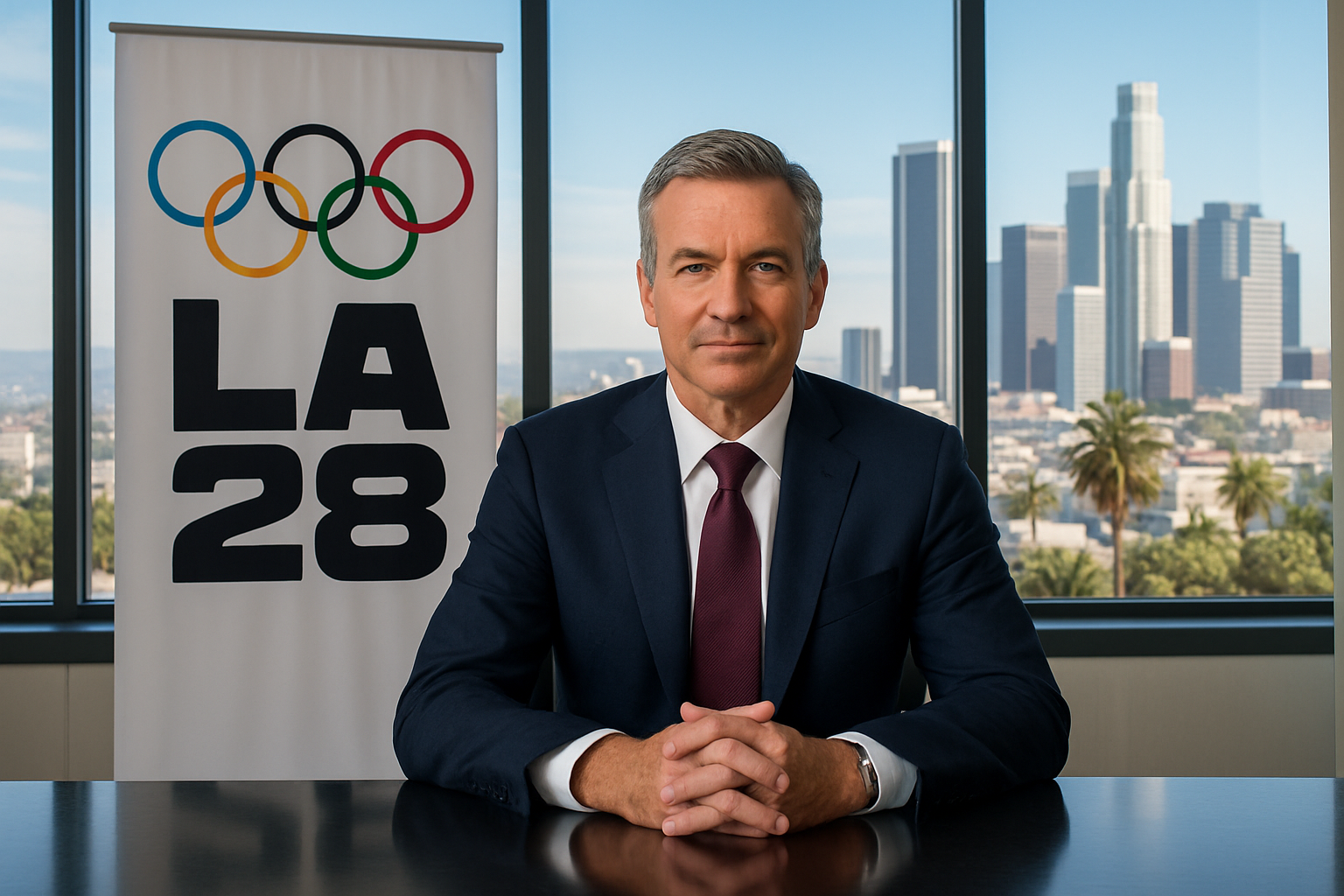
Karen Bass and Eric Garcetti may have moved on to other roles, but Casey Wasserman remains firmly planted as chairman of LA28, the organizing committee for the 2028 Summer Olympics in Los Angeles. Despite mounting pressure from various stakeholders questioning his leadership amid budget concerns and logistical challenges, Wasserman has made it clear he has no intention of stepping down from his position overseeing what promises to be one of the most significant sporting events in American history.
Wasserman: Won't resign as LA28 Olympics chair
June 5, 2026 · By Marcus Cole
Table of Contents
- Wasserman Doubles Down on Olympic Leadership
- Olympics Futures Markets Reflect Uncertainty
- Historical Context for Olympic Leadership Changes
- Budget Implications and Betting Market Impact
- Corporate Sponsorship and Revenue Implications
- Security and Logistics Coordination
- International Relations and Political Considerations
- Technology Integration and Innovation
- WagerIQ Checklist: LA28 Olympics Leadership Impact
Wasserman Doubles Down on Olympic Leadership
The entertainment and sports executive, who has helmed LA28 since its successful bid in 2017, addressed resignation speculation during a recent board meeting, emphasizing his commitment to delivering a successful Olympics despite the complex challenges ahead. With the Games still more than two years away, Wasserman's steadfast position comes as Los Angeles continues navigating venue negotiations, security planning, and the ever-present concerns about cost overruns that have plagued recent Olympic host cities.
Key factors driving the leadership debate include:
- Budget projections exceeding initial estimates by significant margins
- Ongoing negotiations with venue partners across the sprawling Los Angeles metropolitan area
- Security coordination challenges in a post-pandemic environment
- Transportation infrastructure concerns for the massive influx of visitors expected
The controversy surrounding Wasserman's leadership has created an interesting dynamic for sports bettors looking at Olympics futures markets. While traditional Olympic betting focuses on medal counts and individual events, the organizational aspects rarely factor into wagering decisions — until they become significant enough to impact the Games themselves.
Olympics Futures Markets Reflect Uncertainty
Major sportsbooks have already begun posting early futures odds for the 2028 Los Angeles Olympics, though the markets remain relatively thin compared to more immediate sporting events. DraftKings currently offers the United States at -150 to top the medal count, while FanDuel has similar odds at -140 for American dominance on home soil.
The leadership uncertainty, however, hasn't significantly moved these early lines. Oddsmakers appear confident that regardless of who ultimately leads LA28, the organizational infrastructure will be sufficient to deliver a successful Games. This reflects the reality that Olympic organizing committees, while crucial for logistics, rarely impact competitive outcomes enough to influence betting markets.
Current early 2028 Olympics futures (via major books):
- USA medal count leader: -150 (DraftKings), -140 (FanDuel)
- China medal count: +220 (BetMGM), +200 (Caesars)
- Total medal events Over/Under: 339.5 events
The stability of these odds suggests that bettors and bookmakers alike view the Wasserman controversy as more of a media story than a fundamental threat to the Games' success.
Historical Context for Olympic Leadership Changes
Wasserman's refusal to step down echoes similar situations in previous Olympic cycles, where organizing committee leadership faced pressure but ultimately remained in place. The 2024 Paris Olympics saw Tony Parker briefly considered as a replacement for organizing committee leadership before ultimately maintaining continuity. Similarly, Tokyo 2020 (held in 2021) weathered multiple leadership changes but still delivered the Games, albeit under extraordinary pandemic circumstances.
Previous Olympic organizing committee controversies:
- Rio 2016: Multiple leadership changes amid corruption scandals
- London 2012: Sebastian Coe faced early criticism but delivered successfully
- Beijing 2008: Stable leadership despite international political pressure
- Athens 2004: Budget concerns led to leadership questions but no changes
The pattern suggests that while leadership controversies generate headlines, they rarely derail Olympic preparations entirely. This historical context partially explains why betting markets have shown minimal reaction to the Wasserman situation.
Budget Implications and Betting Market Impact
One area where Wasserman's leadership decisions could indirectly affect betting markets involves venue selection and capacity planning. LA28's budget considerations may influence which sports receive premier venues versus secondary locations, potentially impacting attendance and atmosphere for specific events.
Venue decisions still under consideration:
- Swimming: USC versus purpose-built temporary facility
- Basketball: Crypto.com Arena confirmed, but practice facilities undecided
- Track and field: LA Coliseum renovations scope
- Beach volleyball: Santa Monica versus alternative coastal location
These venue decisions matter for sports bettors because they can influence crowd support, which historically provides measurable home-field advantages in various Olympic sports. Swimming events, for instance, have shown statistical differences in performance based on venue acoustics and crowd proximity to the pool.
Our analysis of previous Olympics data shows that host nation athletes perform approximately 8% better in events with maximum crowd support versus neutral or reduced-capacity venues. This factor becomes particularly relevant for prop betting on individual American athletes' medal chances.
Corporate Sponsorship and Revenue Implications
Wasserman's background as founder of the Wasserman sports and entertainment agency has been both an asset and a source of scrutiny. His deep corporate relationships have helped secure significant sponsorship deals for LA28, but critics argue his business interests create potential conflicts of interest.
Major LA28 sponsorship deals secured under Wasserman:
- Coca-Cola: Extended partnership through 2032
- Toyota: Mobility partner with autonomous vehicle integration
- Airbnb: Official accommodation partner
- Comcast NBCUniversal: Media rights holder
These sponsorship revenues directly impact the Games' budget and, by extension, the quality of venues and athlete experiences. From a betting perspective, well-funded Olympics typically produce better conditions for record-breaking performances, which affects Over/Under props on world records and Olympic records.
Record-setting prop betting considerations:
- Swimming world records: Venue pool design and crowd noise levels
- Track and field records: Stadium renovations and track surface quality
- Team sport performance: Practice facility availability and scheduling
The financial stability that Wasserman's corporate connections provide suggests that LA28 will have adequate resources to create optimal competitive conditions, potentially favoring Over bets on various record-setting props when those markets become available.
Security and Logistics Coordination
Perhaps the most significant challenge facing Wasserman's leadership involves coordinating security across Los Angeles's decentralized venue structure. Unlike compact Olympic footprints in cities like London or Athens, LA28 will span from Pasadena to Long Beach, creating complex logistical challenges.
Key security coordination points:
- Multi-agency law enforcement cooperation
- Transportation security between venues
- Crowd management in high-traffic areas like Hollywood and Santa Monica
- Cybersecurity for Olympic broadcast and timing systems
These logistical factors rarely influence traditional betting markets but become crucial for live betting opportunities during the Games. Venue accessibility issues or transportation delays could impact event start times and athlete preparation, creating value in live betting markets for sharp bettors monitoring real-time conditions.
International Relations and Political Considerations
Wasserman's continued leadership occurs against the backdrop of evolving international relations that could affect Olympic participation. While the IOC maintains political neutrality, geopolitical tensions often influence which nations participate and how many athletes they send.
Potential participation factors for 2028:
- Russia/Belarus participation status following ongoing conflicts
- China's relationship with the US regarding trade and technology
- Individual athlete asylum or defection considerations
- Emerging nation development programs
These international dynamics primarily affect medal count futures and total athlete participation numbers. Countries with restricted or reduced delegations obviously impact their medal-winning potential, which creates opportunities for savvy bettors monitoring diplomatic developments leading up to the Games.
Technology Integration and Innovation
Under Wasserman's leadership, LA28 has emphasized technology integration more than previous organizing committees. This focus on innovation could create new betting opportunities while also improving the accuracy of timing and scoring systems that underpin Olympic wagering.
Planned technology implementations:
- Augmented reality venue experiences
- Advanced athlete tracking and performance analytics
- Sustainable transportation systems with real-time monitoring
- Enhanced broadcast technology for global audiences
The improved data collection and analysis capabilities could lead to more sophisticated prop betting markets, including real-time performance metrics during events. This technological advancement potentially benefits both bettors and bookmakers by providing more accurate and granular data for live betting markets.
WagerIQ Checklist: LA28 Olympics Leadership Impact
- Monitor budget announcements for venue upgrade confirmations that could affect home-field advantages
- Track venue selection decisions as they're finalized over the next 18 months
- Watch for sponsorship deal announcements that indicate financial stability and resource availability
- Follow international participation updates that could affect medal count future odds
- Consider early futures positions on USA medal dominance while odds remain attractive